


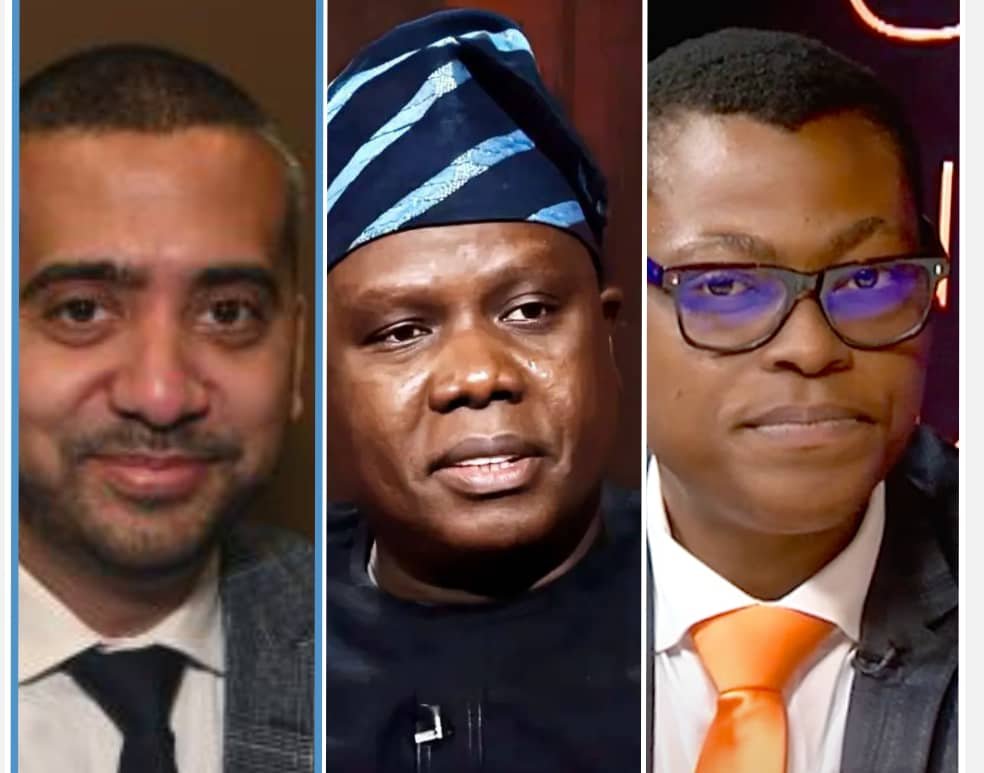
Not long ago, The Naija Broadcastar ran a feature on arguably Nigeria’s most outspoken broadcast journalists, Rufai Oseni of Arise News, titled “Rufai Oseni: Champion of Combative Journalism or Brash Provocateur?” The focus was simple: Rufai is controversial. Some admire his boldness; others are deeply uncomfortable with his style.
In that piece, I took a clear stance. What many Nigerians see as rudeness is actually part of a well-established tradition in journalism: adversarial interviewing. The reactions were revealing. Some dismissed the argument outright, insisting Rufai was disrespectful. Others tried to diminish him by pointing to his academic background, as if what he studied determines his professional competence.
Perhaps the most surprising reactions to my earlier piece did not come from the public but, from within the journalism community itself. Some colleagues even questioned whether adversarial journalism exists at all; a surprising claim, considering that the concept is widely taught in media schools and practiced in newsrooms around the world.
In truth, the reaction reflects a broader challenge within the profession. Too often, journalists stop actively engaging with the evolving ideas and practices of their craft once they leave the classroom. The textbooks that introduced the fundamentals become the final reference point, rather than the starting point for deeper exploration. The most effective journalists are those who keep expanding their horizons, studying global practices, observing different interviewing traditions, and refining their understanding of the profession long after they leave journalism school.
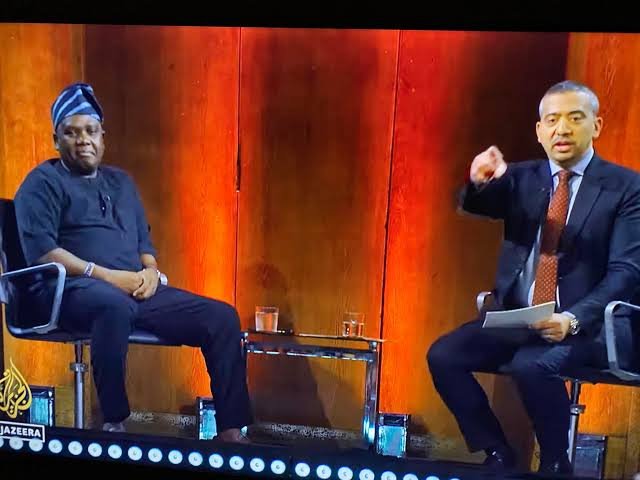
Then, after watching the now widely discussed interview between Daniel Bwala, Special Adviser on Public Communications to President Bola Tinubu, and British-American journalist Mehdi Hasan on Al Jazeera’s Head to Head, I decided to do another feature on why I believe Rufai Oseni deserves greater respect than he currently gets.
What unfolded between Mehdi Hasan and Daniel Bwala was electrifying. It was nothing short of masterclass in bold journalism.
Hasan’s style was, relentless, and unapologetically direct. At times, he asked questions that might seem confrontational: “So, we should not trust you?” or “How can we take anything coming from you seriously?” and “I ask you a third time, Daniel. Who said those words?” But it was never personal. Each challenge, each pointed remark, was a way of demanding honesty and clarity from his guest.
He pressed Bwala on inconsistencies, interrupted evasions, and didn’t let rehearsed talking points go unchallenged. Lines like, “It’s a tragedy that I know your words more than you do” or “You think it’s funny?”, “So you were lying because it was an election campaign?” and “It’s ridiculous that you don’t remember your own words” were sharp, but they showcased a journalist doing his job at the highest level: seeking truth, testing credibility, and holding power accountable.
Since that interview aired, Nigerians have been reacting passionately. Many have praised Mehdi Hasan for what they see as a masterclass in fearless interviewing, celebrating him as one of the world’s most formidable journalists. Others, expectedly, have taken a different view, questioning the sharpness of his approach and suggesting it crossed the line. Yet it is somewhat surprising that even an internationally acclaimed journalist like Hasan should still attract criticism from those who appear to expect him to conduct interviews in the gentler, more deferential style often associated with Nigerian journalistic conversations.
One of those critics is journalist-turned-politician Segun Sowunmi, who described Hasan’s exchange with Daniel Bwala as a “public ambush.” That description is difficult to square with the realities of the profession. In journalism, adversarial interviewing, and even what is sometimes described as ambush journalism, are recognised approaches to holding public figures accountable. They are not unusual departures from the craft; they are part of its long-standing tradition.
Which raises an interesting question: is Sowunmi speaking from the perspective of an older, more deferential era of journalism, or has the transition into politics shaped the way he now views the profession? Because journalism is not public speaking, and it is certainly not the carefully polished messaging of political communication.
What Mehdi Hasan demonstrated in that interview was not a “public ambush.” None of Mehdi Hasan’s questions was personal. It was the craft of a journalist holding power accountable, in real time. And as I watched, it was impossible not to think of Rufai Oseni. The fearless questioning, the refusal to let evasions go unchallenged, the commitment to the truth. This is exactly what makes Rufai polarizing to some, and admirable to those who understand his work.
It is also striking that some of the loudest attempts to lecture Rufai Oseni on the art ofinterviewing are coming from voices who have never themselves conducted a truly high-stakesbroadcast interview in their entire career.
In Nigeria, too many interviews with public figures resemble polite ceremonies rather than rigorous examinations. Politicians repeat rehearsed talking points, evade the hard questions, and leave the studio untested. That is not journalism; that is public relations. Rufai Oseni doesn’t do public relations.
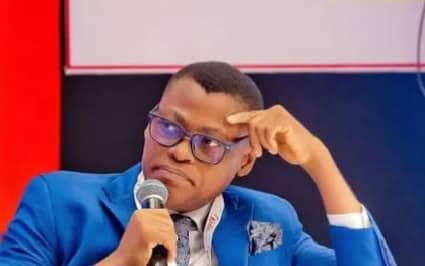
Journalism exists to ask the questions citizens cannot, to confront contradictions, to expose inconsistencies, and to keep authority accountable. Not every journalist needs to adopt Rufai’s style, but we do need journalists who are unafraid to push back when power pushes forward.
Watching Mehdi Hasan operate on the global stage is a reminder: courage in journalism knows no borders. If the world can celebrate Hasan for holding powerful figures accountable, then Nigerians should celebrate Rufai Oseni; his courage, his tenacity, and his unwavering commitment to the truth.
When power sits in the studio, journalism must not crouch. It must stand. And sometimes, it must confront. That is not disrespect. That is the profession. And Rufai Oseni, in every sense, embodies it. TNB