


By Babs Daramola
Editor-in-Chief
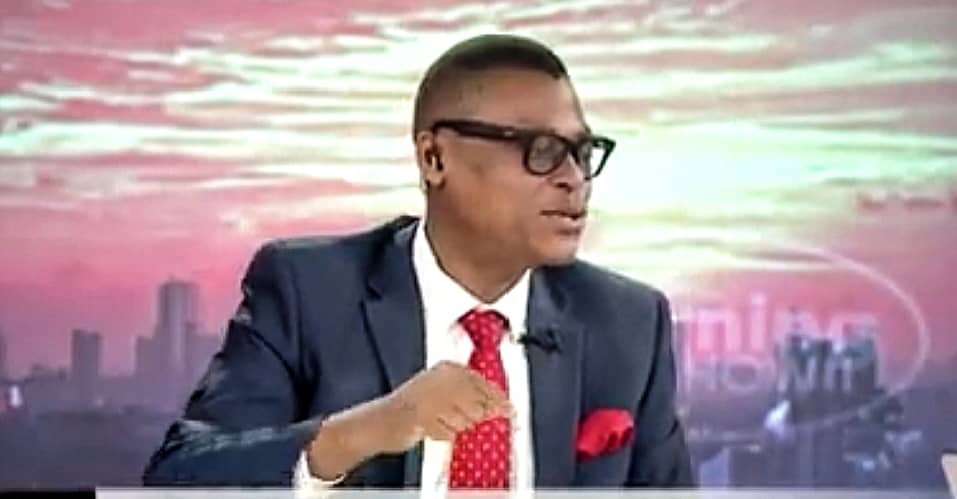
Few journalists in Nigeria provoke as much debate as Rufai Oseni. To some, he is a fearless interrogator of power; to others, a brash provocateur who pushes too hard. On The Morning Show on Arise TV, Oseni has built a reputation for grilling high-profile guests and refusing to be intimidated, a style that often leads to viral television.
A notable example of Rufai Oseni’s confrontational interview style was his on-air clash with former Ekiti State governor, Ayodele Fayose, on The Morning Show two years ago. Irritated by Oseni’s persistent questioning, Fayose veered from the issue and launched a personal attack, citing Oseni’s past altercation with the police over a BRT lane violation as evidence that he was “not above board.” He further alleged, without proof, that Oseni was working for a political party and claimed he had earlier expressed concerns about Oseni’s bias to Dr. Reuben Abati before agreeing to appear on the programme.
In October 2025, his fiery exchange with Works Minister David Umahi over the Lagos–Calabar Coastal Road triggered national conversation after Umahi snapped, “You are too small for me to report to the President.” In 2023, he clashed with APC lawyer Jesutega Onokpasa during a subsidy debate, prompting the infamous on-air retort: “This is not animal psychology.” Earlier, Daniel Bwala, now Special Adviser to President Tinubu, nearly walked off during an interview, accusing Oseni of arrogance. He has been called harsh, disrespectful, even “unAfrican”, by critics who insist journalists should be polite, not provocative.
But Oseni’s approach isn’t an accident. It is rooted in a legitimate global tradition: combative (or adversarial) journalism. According to the Oxford Dictionary of Media and Communication, adversarial journalism is “an oppositional style of reporting characterized by direct challenge and rigorous scrutiny of those in power.” It is grounded in skepticism and built on the belief that public interest is better served when journalists hold power, not hands, to account.
Media ethicists argue that this style is not only valid but necessary. Kelly McBride of the Poynter Institute notes that “pressing powerful figures, even at the risk of controversy, is central to public trust in journalism.” Investigative journalist Jeremy Scahill has called for a revival of adversarial reporting, warning that journalism becomes meaningless when it grows timid.
And Oseni is not alone. Around the world, some of the most respected journalists are also the most controversial:
Piers Morgan has been repeatedly blasted for his aggressive style, including his heated clash over Meghan Markle’s interview, which led to his exit from ITV’s Good Morning Britain.
Jeremy Paxman became a legend on BBC’s Newsnight after asking a government minister the same question 12 times, a masterclass in refusing evasion.
Anderson Cooper of CNN has faced criticism for relentless questioning during political crises, sometimes making guests visibly uncomfortable.
Christiane Amanpour has been accused by governments of being “hostile”—yet she is celebrated as one of world journalism’s most principled voices.
So when Nigerians accuse Oseni of being “too confrontational,” they miss a crucial point: controversy comes with the territory of accountability journalism.
Oseni’s critics are many: partisan supporters who see bias where none exists, viewers unfamiliar with professional interviewing standards, and even journalists who mistake firmness for hostility. But journalism is not a choir; there is no one acceptable tone. Some reporters are calm analysts; others are immersive storytellers. Oseni belongs to a rare breed: interrogators of power. His style may appear abrasive to those accustomed to deferential media culture, but democracy does not thrive on politeness. It thrives on truth. And sometimes, truth must be pursued with urgency.
Defending Rufai Oseni is not about endorsing rudeness; it is about defending press freedom and stylistic diversity in journalism. Because if every journalist were “polite,” those in power would never feel pressure to answer hard questions. And journalism would become nothing more than public relations.
It’s obvious Rufai Oseni is not everyone’s idea of a journalist. But he doesn’t need to be. He occupies an essential space in Nigerian media: a necessary discomfort in the service of accountability. TNB
1 Comment
Rufai is brash. I don’t like his style.
I believe he will do himself a world of good by being subtle in his approach.